1 x PCI Express 3.0 x16 Slot (PCIE2: x16 mode). AMD 7 th A-Series APUs / Raven Ridge CPUs - 1 x PCI Express 3.0 x16 Slot (PCIE2: x8 mode). AMD Ryzen series CPUs (Picasso, Raven Ridge) - 1 x PCI Express 3.0 x16 Slot (PCIE2: x8 mode) (If you use Athlon series APU, PCIE2 slot will run at x4 mode.). 1 x PCI Express 2.0 x1 Slot.
. PCI Express-compliant motherboard with one dual-width x16 graphics slot. One 6-pin supplementary power connectors. 300 W or greater system power supply. 1.5GB available hard-disk space. 4GB system memory (8GB recommended). Microsoft Windows® 10 64-bit (April 2018 Update or later), Windows 7 64-bit, Linux 64-bit. Internet. PCI-Express x16 (graphics) slot 1 Connect a PCI-Express graphics card to enhance the capabilities of your computer. Expansion slot for dual-width graphics card This expansion slot seats the bottom half of a dual-width graphics card if it is installed in the PCI-Express x16 slot. 10 Views of G5 5090. Expansion slot for dual-width graphics card This expansion slot seats the bottom half of a dual-width graphics card if it is installed in the PCI-Express x16 slot. PCI-Express x4 slot Connect a PCI-Express card such as graphics, audio, or network card to enhance the capabilities of your computer. PCI Express® or PCI Express 3.0-compliant motherboard with one dual-width x16 graphics slot. System Power Supply Minimum 400 W or greater system power supply with one 6-pin PCI Express supplementary power connectors. Thermal and Power Specs: Maximum GPU Temperature: 94 °C / 201 °F Graphics Card Power: 120 W Recommended System Power: 400 W.
How Many PCIe Lanes Do You Really Need?
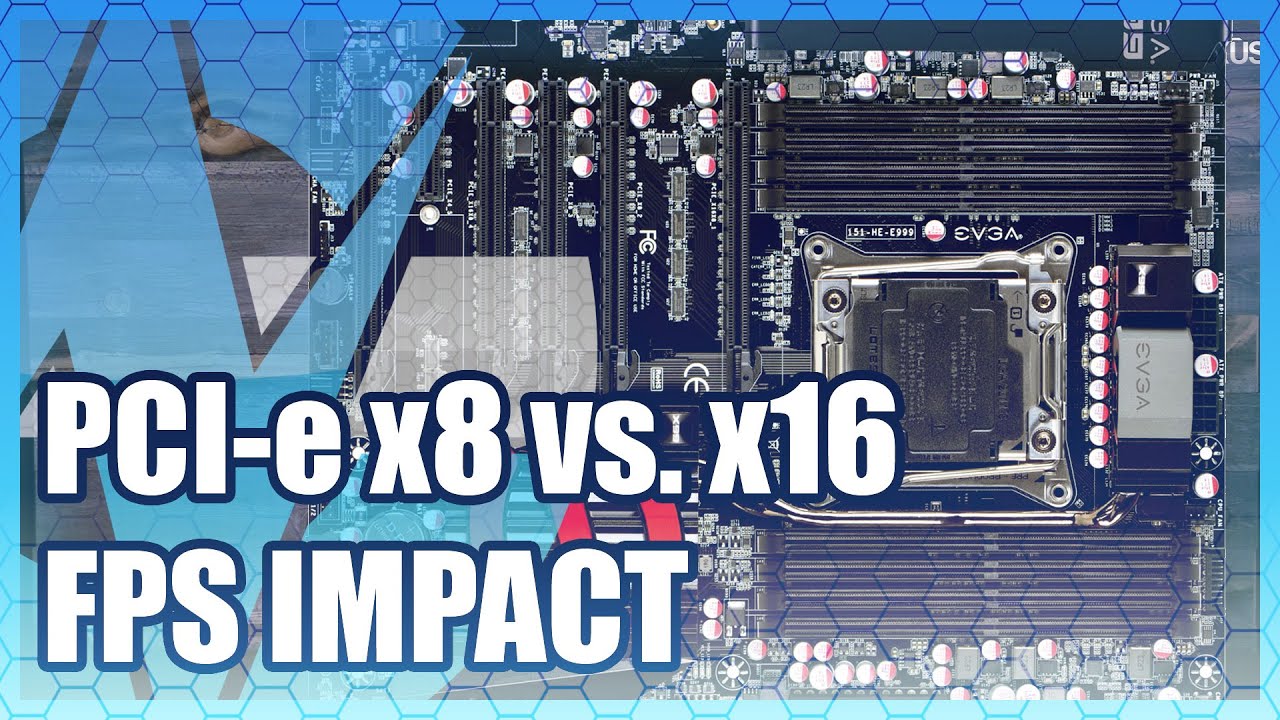
With the new line of X570 motherboards coming up, PCIe 4.0 is finally within reach for the average consumer. With that in mind, it seemed like a good idea to talk about PCIe lanes. What are they exactly, and how many lanes do you really need?
First, a refresher: PCIe 3.0 is the current expansion bus standard used on most modern motherboards. It’s the hardware interface between devices (e.g., video cards, sound cards, M.2 drives, network cards) and the motherboard. The slots come in various sizes (x1, x2, x4, x8, and x16)1, and the speed of a given slot is determined by the number of available PCIe lanes.
The total number of lanes for a slot are broken up into thesame numbers as above (1, 2, 4, 8, 16). However, to make things slightly
confusing, the number of lanes in a slot does not always match the physical slot length. Meaning, you can (and often do) encounter a x16 slot with only 8 lanes. Pro-tip: you can actually see this by looking for the shiny little contacts in the slot itself. If the contacts only go up halfway, that x16 slot only has 8 lanes.
But 8 lanes are often plenty. Even though the theoretical data transfer limits of 8 and 16 lane slots are vastly different2, there is currently no consumer card on the market capable of saturating the bandwidth of a PCIe 3.0 x16 slot. While the amount of data being “crunched” by a high-end video card is often above that limit, the majority of calculations related to the device are actually handled by the card’s internal processor, and therefore do not need to travel through the bus. Performance differences are mainly dependent on the card itself, and not the theoretical limits of the slot.
Motherboards are designed with various amounts of PCIe lanes, and different processors are designed with support for certain amounts of lanes. Server and enthusiast boards are typically designed with more lanes to provide more expandability, and CPU manufacturers segment their products similarly. For example, the Intel Core i7-9700K supports a maximum of 16 lanes, while the Core i9-9980XE supports a maximum of 44. But bigger is not always better—the processors are simply designed for different environments.
However, to complicate things further, there is such a thing known as a PCI Express Switch, which is a chip on some motherboards that is often said to double the number of lanes, but this is not strictly accurate. While it does not magically create more, it does alter how the CPU manages signals to the slots via signal multiplexing. In short, it changes how data is sent and received from the CPU to the PCIe slots in order to utilize the same number of lanes more dynamically across devices to achieve better performance.
Back to the topic at hand: the number of lanes you need depends on how many PCIe devices you want to use in your system, and how fast you want all those devices to run, though noticeable effects on performance usually only occur in niche configurations. A single GPU runs best with 16 lanes. When installing an additional GPU, be sure to use a x16 slot with 16 lanes, if possible. Conversely, if you are adding a x4 card and only have a x8 slot available, that will work too. All PCIe 3.0 slots are compatible with smaller form factor devices, assuming they physically fit into the slot.
Any time you dive into a technology topic, it’s easy to become overwhelmed. Luckily, BOXX has done all the research for you and designed workstations to fit any workflow. The APEXX S3, our flagship workstation, is designed for single-threaded applications that run at peak efficiency with a single high-end GPU. However, if you require that same unmatched overclocked processor (8 cores at 5.1GHz) but require more PCIe lanes, the APEXX Enigma S3 is the perfect option. Or if you need even more space, the APEXX S4 has enough lanes to run four dual-width GPUs.
Those are just a few examples. Regardless of your specific needs, BOXX has a workstation with your workflow in mind. Talk to a BOXX Performance Specialist today to learn more.
1 Technically x32 slots do exist, but they’re very rare.
2 7,880MB/s and 15,760MB/s, respectively.
| ||||||||||||||||||||||
- Powered by Radeon® HD 2600XT GPU - 800MHz
- Superscalar unified shader architecture
- 120 stream processing units
- 256MB 128-bit GDDR4 - 2200MHz
- Comprehensive DirectX® 10 support
- Integrated CrossFireTM
- Built-in HDMI and 5.1 surround audio
- Dynamic geometry acceleration
- Game physics processing capability
CHIPSET FEATURES
- 390 million transistors using 65nm fabrication process
- Superscalar unified shader architecture
- 120 stream processing units
- 128-bit GDDR4 memory interface
- Comprehensive DirectX® 10 support
- CrossFireTM multi-GPU
- High-speed 128-bit HDR lighting
- Up to 24x Custom Filter Anti-Aliasing
- ATI AvivoTM HD Video and Display architecture
- Built-in HDMI and 5.1 surround sound
- Support for the ATI RadeonTM DVI to HDMI adapter
- Unified Video Decoder (UVD) for Blu-rayTM and HD DVD
HIS PRODUCTS ADVANTAGE
- HIS Radeon™ HD 2600 XT delivers remarkable gaming performance for Windows Vista™ and DirectX® 10
- HIS Radeon™ HD 2600 XT features hardware HD video processing and HDMI with built-in 5.1 surround audio
- ATI Avivo™ HD technology delivers sharp images and vibrant color fidelity from 1080p playback of Blu-ray™ and HD DVDs movies
- HIS Radeon™ HD 2600 XT delivers powerful graphics performance to enhance the stunning Windows Vista™ user experience
- 65nm process – internal power on all skus
ACCESSORIES |
SOFTWARE BUNDLED
|
CABLE/ADAPTOR BUNDLED
|
| Model Name | |
| Chipset | Radeon HD 2600 PCIe Series |
| ASIC | |
| Pixel Pipelines | 120 stream processing units* (Unified) |
| Vertex Engines | |
| Manu. Process (Micron) | 65nm |
| Transistor | 180 million transistors on 65nm fabrication process |
| Fill Rate | |
| Memory Size (MB) | 256 |
| Memory Type | |
| RAMDAC (MHz) | 400 |
| Engine CLK (MHz) | |
| Memory CLK (MHz) | 2200 |
| Memory Interface (bit) | |
| Memory Bandwidth | |
| Max. Resolution | 2560*1600 |
| Bus Interface | |
| Power Supply Requirement | Connection to 400 Watt (550 for CrossFire™) or greater power supply with two 2x3-pin PCIe® power connectors is required. |
| VGA | No |
| 2nd VGA | |
| DVI | Yes |
| 2nd DVI | |
| TV-out | Yes |
| HDTV (YPrPb component output) | |
| Video-in | No |
| TV Tuner | |
| FM Tuner | No |
ATI Radeon HD 2600 System Requirements
- PCI Express® based PC is required with one dual-width X16 lane graphics slot available on the motherboard
- AMD Athlon® or Intel® Pentium
- 1GB of system memory
- Connection to 400 Watt (550 for CrossFire™) or greater power supply with two 2x3-pin PCIe® power connectors is required.
- Certified power supplies are strongly recommended. Refer to http://ati.amd.com/CertifiedPSU for a list of Certified products
- Certified system cases with good airflow and cooling are recommended. Refer to http://ati.amd.com/certifiedcases for a list of Certified products
- Installation software requires CD-ROM drive
- To complete the CrossFire™ platform, a second ATI Radeon™ HD 2600 graphics card, a CrossFire™ Ready motherboard and one CrossFire™ Bridge Interconnect cable per board are required
Remarkable Gaming Performance for DirectX® 10
HIS Radeon™ HD 2600 XT delivers remarkable gaming performance to unleash the HD visual effects within Windows Vista™ and DirectX® 10. Plug-n-play CrossFire™ upgradeability makes it easy to scale up graphics performance to boost the most demanding games; and built-in multichannel 5.1-surround audio over HDMI establishes a new level of entertainment designed for tech savvy gamers.
ATI Avivo™ HD Video & Media
HIS Radeon™ HD 2600 XT features advanced hardware HD video processing and HDMI with built-in 5.1 surround sound for stunning big-screen entertainment. Home theater aficionados will be mesmerized by ATI Avivo™ HD technology that delivers sharp images and vibrant color fidelity from 1080p playback of Blu-ray™ and HD DVDs movies.
Certified for Windows Vista™
HIS Radeon™ HD 2600 XT delivers powerful graphics performance to enhance the stunning Windows Aero™ user interface. ATI Catalyst™ graphics management software is Certified for Windows Vista™ and is designed for quick and easy setup of graphics, video, and multiple displays.
Pcie X1 In X16 Slot
Post your comment
Comments will be reviewed by the editors before being published, mainly to ensure that spam and irrelevant material are not published . Please feel free to comment!
We strongly encourage you to use your real name. E-mail addresses are required in case we need to follow up with you directly. We won't publish your e-mail address unless you request.
Pcie X16 Slot Graphic Card
HIS has won over 1700 awards with AMD graphic solutions from major media worldwide.